
This guide sets out a Friday routine that runs in a fixed order. The sequence matters: decide what the week must deliver, prepare the files, logins and devices that deliver it, then check the calendar. Each step takes a few minutes, and together they usually fit into one session of about 20 minutes before you log off on Friday.
Decide which three tasks must finish Monday
Keep the list short. Pick three tasks for Monday rather than ten, because a list that long often means none of them gets finished first. Mark the one whose missed deadline would cause the most trouble and put it at the top. A sensible rule is to make these decisions on Friday afternoon rather than Monday morning, since Monday choices tend to go to whoever is loudest in the inbox. A clear target also gives the first hour of a Monday morning work routine a defined purpose, so the day does not begin with whatever message arrived last.
Compare where your task list lives
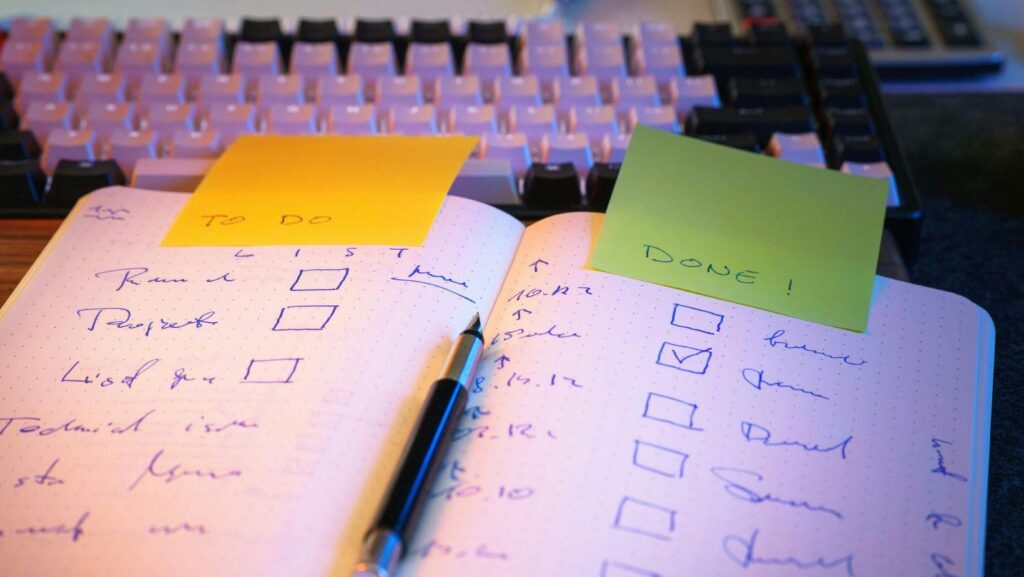
The right home for the list depends on how often you open it. A paper notebook suits people who plan on paper, and it keeps tasks out of the notification stream, which helps if the phone is where distractions begin. A task list app suits people who already check their phone every hour, because the list appears where they already look. Many apps let you pin a short view, which keeps the Friday list at the top of the screen.
The table below compares the two common options:
|
Option |
Suits |
Watch out for |
|
Paper notebook |
People who plan on paper and want fewer alerts |
Easy to leave on the desk on Friday evening |
|
Task list app |
People who check their phone often for playing at Gamdom Australia |
Notifications can bury the list |
Pick one home only. Copying the list into a second place is where tasks quietly go missing, and a Monday list that disagrees with the Friday one causes more confusion than having no list at all.
Prepare files and logins before Monday
Spend around 15 minutes on this step on Friday so Monday does not start with a password reset.
Confirm logins
If you use a password manager, confirm that the entries for the three priority tasks open correctly. Log in to each of those accounts once, and if a prompt asks for a code from a phone, keep that phone nearby while you check.
Check the files
Open each file for the three tasks once. That confirms it loads and is not stuck in a cloud queue. A cloud sync icon that still shows arrows means the version on screen may be older than the one on another device, so wait for the arrows to stop before you close the laptop.
Check calendar and reminders
Work through these four checks in order:
Calendar reminders are easy to set once and forget. A quick pass on Friday catches the ones that would otherwise fire at 8:30 on Monday for a meeting that moved.
Restart and clear your devices
Restart the laptop instead of putting it to sleep. Many device updates wait for a restart and then install at the worst moment, while the first meeting is starting. If the restart happens on Friday, most of that work is finished before the weekend.
Plug in the laptop and let a backup run overnight. A full backup can take anywhere from about 30 minutes to a few hours, depending on how much data it covers, so starting it at the end of the day avoids a slow first hour. Empty the downloads folder as well, so there is room for Monday’s files. That small step often saves considerable waiting.
Set up your first click on Monday
Leave the workspace so the first action on Monday is the work itself. Open the first file for the day in its own window, not hidden behind the email app. Keep the charger cable coiled beside the bag, and put the work phone on its charger near the door or wherever you pass first, so it does not run out during the morning.
Write one line on a sticky note stating the first action, such as “send the draft to Priya”. A note that starts with a verb tells you what to do before you have had time to open anything else, and it takes a few seconds to write on Friday.